

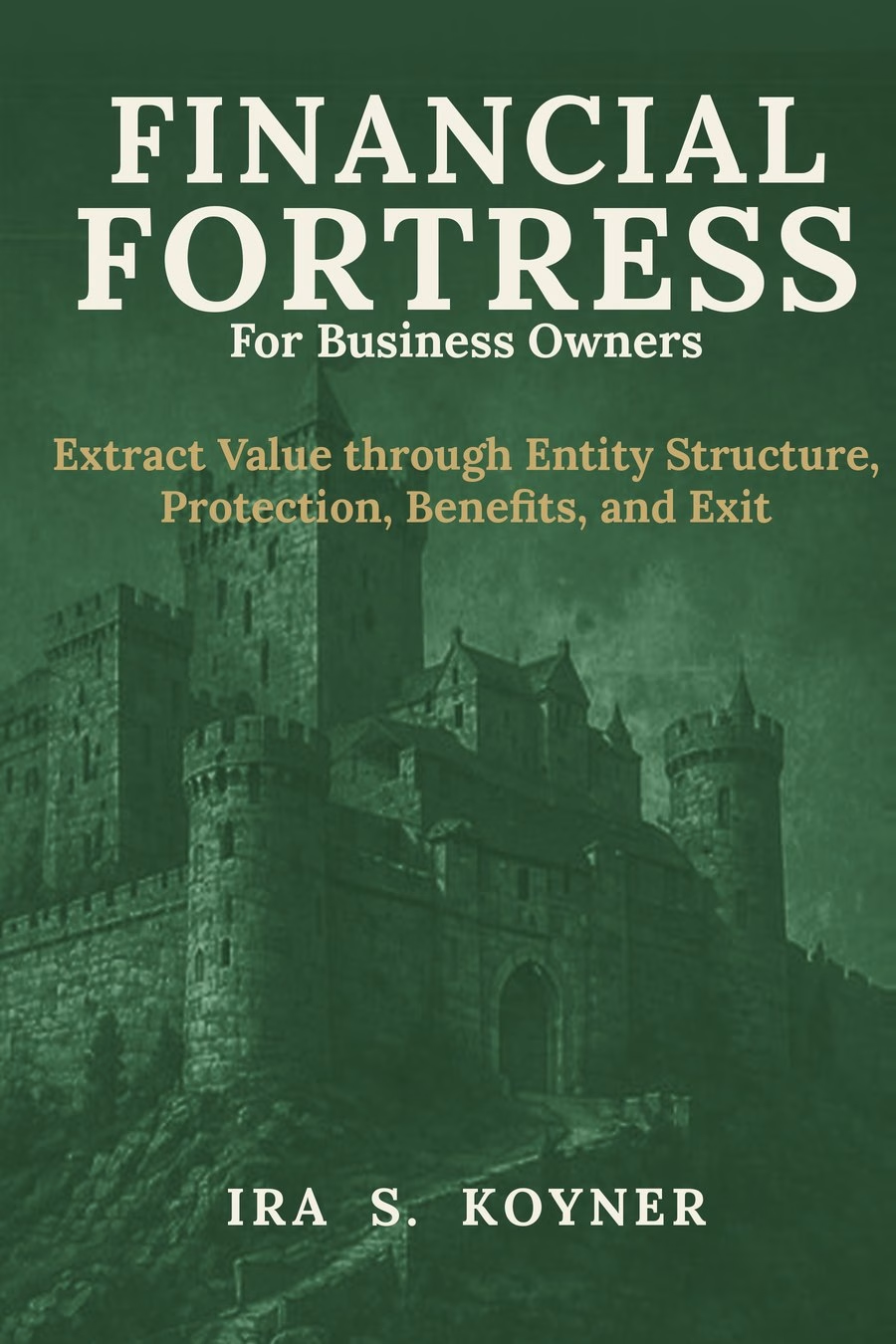
Financial Fortress for Business Owners
Extract Value through Entity Structure, Protection, Benefits, and Exit
Engineered as One System
A business is not protected by any single decision.
It is protected by decisions that work together.
This book engineers them as one structure.
The Problem
Four channels move value out of a business that looks well run.
Most owners manage one or two of these well. Few manage all four. None of them announce themselves in a given year. They accumulate at the seams, in the gap between decisions that each made sense on their own and the structure that never fully held together.
Entity and Tax Structure
The entity chosen at formation rarely fits the business it becomes. The wrong structure quietly overpays self-employment tax, strands the QBI deduction, or double-taxes the profit a different entity would have shielded.
Continuity and Key People
A partner death, a disability, or the loss of the one producer the business cannot replace does not wait for a plan. Without an agreement and the capital to fund it, the business becomes the asset everyone fights over.
Benefit Extraction
Owners pull money out the way they always have, taxed at the top, when the same dollars routed through a retirement, benefit, or insurance structure would reach them at a fraction of the cost.
Exit and Estate
The exit is treated as a single transaction at the end. In reality it is a multi-year process, and the structures that lower the tax and protect the estate have to be installed years before the sale.
What's Inside
A coordinated plan for the business in four acts.
-
Entity Selection and Tax StructureWhy the entity chosen at formation rarely fits the business it becomes, and how the right structure changes what self-employment tax, the QBI deduction, and reinvested profit actually cost.
-
Continuity and ProtectionBuy-sell agreements, key person coverage, and retention structures that keep the business intact when a partner dies, a producer leaves, or disability arrives without warning.
-
Benefit ExtractionRetirement plan design, group and executive benefits, and insurance-based structures that move money to the owner at a fraction of the tax cost of simply taking it as income.
-
Exit and Estate PlanningTreating the exit as the multi-year process it is, with the structures that reduce the tax at sale, protect the estate, and decide how much of the business actually reaches the next generation.
What Makes This Business Planning Book Different
Coordination over fragmentation.
Real numbers, real consequences
Every case study uses specific tax rates, entity structures, and dollar figures. Lewis moved $2.7 million more to his heirs from the same estate. Solomon funded five separate obligations from a single premium. The math is shown, not assumed.
Built from a trading desk
Written by a financial advisor who spent nearly three decades managing institutional risk in global currency markets. Hope and prayer were not acceptable strategies on a trading floor. They are not acceptable in business planning either.
The whole system, not one piece
Most books cover the entity or the buy-sell or the exit. This book shows what happens when those decisions collide. The S-corp that strands a benefit. The buy-sell with no money behind it. The exit planned the year of the sale.
Honest about what does not work
The book shows when a structure is not the answer, not just when it is. The deals that are not tax plays are labeled as such. Any comparison that does not show the other side is selling something.
From the Case Studies
Same business. Same dollars. Different architecture.
Solomon installed one cash-value policy at age 51 that, over 34 years, funded a buy-sell, backed a bank loan, bridged a benefit, and delivered a tax-free death benefit. One structure, five jobs.
Lewis moved $2.7 million more to his heirs, 8.5% more value, from the same estate and the same business, by coordinating the exit and the estate plan instead of running them separately.
Dominique reached the full $72,000 retirement contribution limit while the plan cost just 26 cents on the dollar in employee contributions, by stacking the plan design instead of using an off-the-shelf SEP.
Donald and Gil funded their buyout with $2.7 million in premiums instead of self-funding $4.1 million, putting an asset behind the agreement rather than a hope.
Shalom directed more than five dollars to charity for every dollar of reduced inheritance, while the full trust principal still passed to his children free of estate and income tax.
Who This Book Is For
Owners with something worth protecting.
This book is for the owner of a closely held business who has built real value and wants a structure that holds through a partner's exit, a key person's loss, a tax change, and the eventual sale or transfer.
If you have ever wondered whether your entity, your buy-sell, your benefits, and your exit plan are working together or merely coexisting, this book is for you.
If you want a quick tax trick or a one-size template, read something else.
Financial Fortress for Business Owners covers the entity selection mistake most owners never revisit, the buy-sell agreement with no funding behind it, the benefit extraction strategies that move money to the owner at a fraction of the tax cost, and the exit and estate planning that has to begin years before the sale. It is a business plan built around coordination, not checklists. If your entity structure, your continuity plan, your retirement and benefit design, and your exit strategy have never been evaluated as a single system, this is where to start.
Ira S. Koyner managed foreign exchange options portfolios at major global banks for nearly three decades. He holds a degree from the Wharton School and is the founder of Triathlon Partners LLC, a financial advisory firm serving business owners and clients approaching and in retirement.
This book began with the gaps he kept finding between his clients' advisors, where each decision was sound on its own and no one was accountable for how they fit together. If you want to look closely at yours, he is glad to help.
Does anyone see the whole picture, and is anyone accountable for how the pieces interact?
If reading this book raised questions about your own business structure, that is a useful signal. The conversation does not have to start with a product. It starts with a look at what you have built.
Schedule a Planning Conversationor
Available in hardcover, paperback, and digital